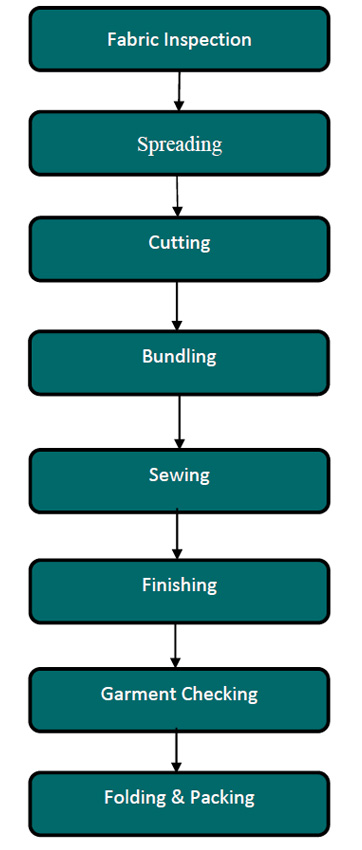

It is the process of laying fabric layers on a table, one on top of another so as to form a “lay”. The fabric from the stores is issued to the cutting room daily in advance and it will be stored in the cantilever rack provided next to the cutting tables. The fabric roll is loaded on to roll holders. The fabric is spread manually by spreaders and layers are cut with the help of scissors or end cutters. The fabric is laid in open form. The straight knife is used to cut the lay. In order to cut across on such a wide table, a mobile cutting machine guiding rail is used. This rail is a “mobile” guide that is used along with a straight knife cutting machine having a foldable handle bar.
The production system to be implemented in the factory would be an Assembly Line System whereby a group of operators would work on a product depending on the product type. Operation sequences for sewing room operations would define the sequence of the operations for the reference styles in the projected product mix, along with machine type and work-aids required. Stitching quality and production are of immense importance; hence imported machines are suggested which are capable of producing high quality end product at good speeds. All the sewing machines would be procured from reputed sewing machine suppliers. The line will have random check. All pieces will also be checked fully at the end of the line before they are moved on to the finishing department
In the finishing stage the sewn products are checked for any faults or defects. These if reparable are mended or the piece is rejected. The pieces are then ironed and packed, after a few more check points. In case the pieces have any soiling/staining a stain removal station helps in cleaning the same
The apparel produce are checked thoroughly for various types of defects such as:
- Broken Needle
- Fly
- Hole
- Thick Yarn
- Thin Yarn
- Barrie
Here the final product is categorized quality-wise, the products then found okay are segregated and sent to packing department whereas defective ones are sent to correction
After inspection, the set are wrapped in polythene bags and send for packing in suitable form as per buyer’s specifications.
Set so formed and packed as per buyers requirements are then sent for final dispatched